

Anthropic builds one of the most capable general-purpose AI systems on the market. Its aggressive move into drug design in recent months has pharma talking.
In June 2026, the company poached John Jumper, who shared the Nobel Prize for AlphaFold with Demis Hassabis and David Baker, from Google DeepMind. On June 30, it shipped Claude Science alongside Claude Code, and announced it would run its own preclinical programs for neglected diseases.
Through its partnership with Basecamp Research, Anthropic enabled the rapid design of new powerful antibiotic peptides that came back 97% active against WHO priority pathogens when the University of Pennsylvania's Machine Biology Group tested them; one candidate, EDEN-7, matched a last-line antibiotic against multidrug-resistant Acinetobacter baumannii in mice, generated without any iterative optimization.
Earlier, Anthropic acquired Coefficient Bio, a drug-development operations startup, for a reported $400 million. The company also put Novartis CEO Vas Narasimhan on its board. The list of high-profile moves in the pharma industry goes on…
All of it landed months before Anthropic’s widely expected initial public offering (IPO).
One camp reads this as a frontier lab preparing to disrupt the legacy pharmaceutical business model, “to do to pharma what it did to coding”. The other reads it more like a pre-IPO flex in a high-stakes industry. I think it is a bit of both.
The question I want to explore is not about IPO speculation, or whether Anthropic can beat a giant like Pfizer at Pfizer's game. It probably can't. The question is how it might use its edge in computation and AI infrastructure to assemble a different kind of drug company, one that runs more efficiently than the incumbents.
Anthropic is a fairly unique entrant in drug discovery, unlike many other companies. The uniqueness comes from unprecedented generalizability and autonomy of its AI platform. It can read a paper, design a molecule, write the code that analyzes the result, and draft the regulatory document — it touches the science and the operations at once, and it can reach into business models, hiring, and how the work is organized.
But the fundamentals of drug discovery have resisted every technology aimed at them so far, and not for lack of resources. AI is ultimately a way to model biological reality, and as George Box put it, “all models are wrong, some are useful”. Biology may stay stubbornly “un-hackable” for a long time yet, even with the advent of AI. What might prove far more useful, and far sooner, is what AI could do to the pharmaceutical business model — how efficiently a drug business can be put together, and how it could be run.

Almost Every Prominent Tech Company is Standing at the Same Door These Days
Anthropic’s push into pharma/biotech and healthcare is not an outlier. Over the past few years, nearly every major figure in technology has moved into biology, and the pace picked up sharply in 2026.
Oracle’s Larry Ellison has been a vocal supporter and donor to various longevity and drug discovery-oriented projects for decades. In 2021, Demis Hassabis spun Isomorphic Labs out of DeepMind to do AI-native drug design, backed by Alphabet. In 2022, Jeff Bezos was one of the primary high-profile investors behind Altos Labs, a heavily funded biotechnology startup dedicated to cellular rejuvenation programming.
Anthropic’s closest competitor, OpenAI, released GPT-Rosalind, a dedicated biological reasoning model, in April 2026, and Sam Altman supported a billion-dollar round into Retro Biosciences, a longevity company now in clinical trials. Jensen Huang’s NVIDIA pledged up to a billion dollars over five years to a co-innovation lab with Eli Lilly in South San Francisco, running on NVIDIA’s own life science infrastructure — BioNeMo platform. Brian Armstrong, who built Coinbase, co-founded NewLimit, which raised a $435 million Series C on June 2, 2026 — led by Founders Fund, with Eli Lilly’s venture arm participating, at a $3.1 billion valuation — to bring the first epigenetic-reprogramming medicine into human trials in 2027. The list goes on.
Most of these companies and investors traditionally had little relation to life sciences. They got into prominence thanks to contributions to general AI research, software business, crypto, e-commerce, chips, and cloud infrastructure. All of them are now spending fortunes on trying to enter the “ultimate game” of biology.
Why are the tech companies with AI capabilities suddenly so bullish on the life sciences? What do they see now that was not there, say, a decade ago?
This tech revolution is structurally different from previous ones
Start with the models themselves.
You can argue modeling has been part of biology for decades, and you would be right. Statistical genomics, molecular docking, QSAR, and homology modeling — the field has been finding patterns in accumulated data since the 1990s, or even earlier.
And the field of artificial intelligence itself is old, for that matter. Researchers named it at Dartmouth in 1956; it reached medicine in the 1970s with expert systems like Internist-1, CASNET, and MYCIN, which promised more than they delivered, and in 1973 the Lighthill report declared the effort a failure. A second wave came with XCON and other expert systems, boomed by 1985, collapsed by 1987 into the AI winter. The field revived in the 1990s on Moore’s law, the internet, and big data. Deep learning broke through in 2012, and so on and so forth...
So what is so special this time?
Mainly, that the tools stopped being tools. Every previous system did a narrow job, i.e., QSAR predicted activity, docking predicted binding, homology modeling predicted structure, etc., — and each required its own specialists, its own data formats, its own interpretation, with none of them connecting to the others.
A frontier AI platform spans the whole range. It reads the literature, writes the analysis code, proposes the target, designs the sequence, and plans the next experiment. It connects to other tools to run calculations or produce content, and acts as an organizing layer over all of them. Using it well still takes deep expertise, arguably more than before. But it is one system covering ground that previously required assembling dozens of separate ones.
The models also became active generators rather than passive analysts, which changed everything. Being able to generate biological hypotheses, molecular entities, and experimental designs, as well as regulatory documents, and all sorts of content output, is a completely different matter than being able to predict something with machine learning.
Accuracy crossed a threshold of practical utility at the same time. For example, homology modeling predicted protein structures for decades, but rarely well enough to act on, so scientists went to the crystallographer anyway. AlphaFold’s predictions are good enough to skip the experiment in some instances. A computation finally reliable enough to replace at least some experimental steps rather than simply suggest them.
And, with Anthropic being at the forefront of it, the systems became agentic. Models now act and interact autonomously, including with the environment and each other, which makes it possible to build complex automation processes with a high degree of intelligence, and even open-ended exploration workflows.
DeepMind and FutureHouse, for instance, published autonomous research systems in Nature this year — one discovered forty single-cell analysis methods that beat the best human-designed ones on a public leaderboard, and generated fourteen models that outperformed the CDC’s ensemble for forecasting COVID hospitalizations. The capability started producing results a domain expert would sign off on (it still makes mistakes, hallucinates, and so on, but that is another question).
Five years ago, an AI system conducting independent scientific work was a conference talk at best. Today, a Harvard physicist, Matthew Schwartz, writing on Anthropic’s own site, estimated that Opus 4.5 executes scientific projects at roughly the level of a second-year graduate student. I actually dislike this symbolism of comparing AI performance to graduate students, or PhDs, and it is probably unnecessary. But the point is, AI is truly capable and increasingly autonomous now, hard to disagree.
Beyond models, there is another aspect of the modern tech industry that has no historical precedent: the sheer scale of resources and capabilities. Money is flooding in, and it created a special moment in time, where it is actually possible to bet wildly and expensively.
Big tech spent two decades building data centers, proprietary models, and cloud infrastructure for search, advertising, and commerce, and in doing so accumulated compute and engineering depth for reasons that had nothing to do with medicine. The largest technology companies, including frontier AI labs like Anthropic and OpenAI, now run capital-expenditure budgets in the tens of billions of dollars a year, most of it aimed at AI infrastructure — a scale of spending on compute that no pharmaceutical company has ever had reason to approach.
Pharma has always optimized for wet labs, clinical operations, and regulatory affairs. It never needed a fleet of GPUs, and so it never built one at the scale the tech companies now train models on. Big pharma is now catching up on this, but about it later…
Can You Reverse Engineer an Evolved System?
Underneath the gold rush to apply frontier AI models to crack biology is a wild bet on something that may or may not prove to be fundamentally true.
Dario Amodei laid out the optimistic case at Anthropic’s AI for Science briefing, insightfully reported on by a prominent tech editor, Brian Buntz. Amodei called AI “a general-purpose technology that helps us make sense of [biology’s] complexity in its full complexity,” while conceding, plainly, that biology is a “super messy evolved system.”
Earlier, Demis Hassabis explained beautifully why he believed biology is the ideal problem for AI, and why AI will, in time, solve it.
The counter-argument is older than any of these novel AI tools, and it has a name, Buntz explains. In 2007, Intel’s Andy Grove scolded the pharmaceutical industry for lacking the chip world’s urgency and, in effect, wished Moore’s Law onto drug discovery — if semiconductors could double in capability every two years, why couldn’t medicine? The famous chemistry commentator Derek Lowe criticized him, and the point eventually stuck with us as the Andy Grove Fallacy: understanding an evolved system you did not design is not the same problem as engineering one you did.
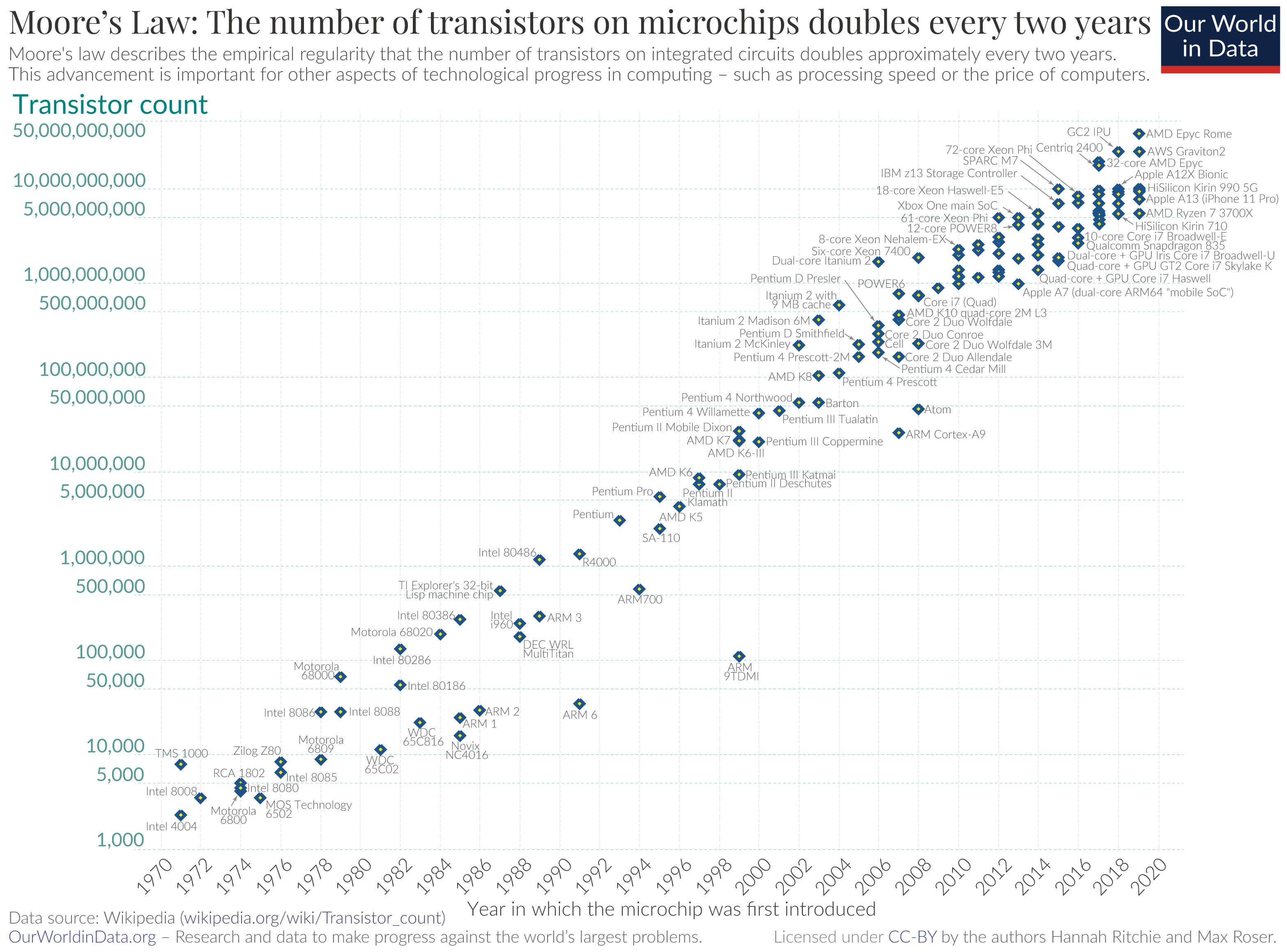
A microprocessor obeys rules its makers wrote down. A cell obeys rules four billion years of evolution wrote in a language we are still learning to read, with no source code and no comments. A designed system can be improved by design. An evolved one can only be discovered by experiment.
As Buntz further writes in his article, Amodei said he “basically agrees” with Lowe. He is not claiming biology is as tractable as silicon. His wager is subtler and, in its way, more audacious — that AI’s growth curve is exponential and general enough to wrestle that irreducible messiness anyway, to brute-force and pattern-match a path into an evolved system’s logic even without the clean scaling that engineering enjoys. I assume this is what Demis Hassabis also implied when talking about biology two years earlier. Every frontier AI model lab entering drug discovery and biotech is basically going against Lowe’s skepticism, betting on the idea that a substantially powerful and generalizable tech platform can dramatically revolutionize medical innovation.
The historical record is not kind to that type of bet, however.
The Human Genome Project was going to transform medicine, as many believed back in 2003, but the overall impact is still somewhat limited, I would say. Sequencing a genome went from billions of dollars to a few hundred, but the transformation, while real, arrived much more slowly and more narrowly than many would have imagined in the past. The discovery of CRISPR in 2012 as a universal gene editing platform arrived as a paradigm-shifting breakthrough, winning the Nobel Prize in 2020, but a decade of extraordinary progress in gene editing tools has produced only one CRISPR-based approved therapy on the market (Casgevy), still leaving a long list of diseases waiting, and several clinical failures.
Each of those breakthroughs advanced the field enormously, but has not “cracked” biology in a broad sense (aka, “treat all diseases,” “alleviate all suffering”) and has not led to universal drug discovery success improvements either. In every case, the wall is the astronomical complexity and messiness of the evolved biological systems. But Amodei, Hassabis, and others are betting the AI progress curve will crack this puzzle someday, because this technology can connect all other technologies, in one way or another.
Time will tell if the scientific promise holds. But another interesting question is what happens if it does, because the pharma industry that would have to absorb that capability was not built to absorb changes quickly.
Designing a Drug is Not the Same as Making One
With AI, the compressible part is discovery: reading the literature, forming hypotheses, designing candidates. It is being automated by several labs at once. ChemCrow, an LLM chemistry agent wired to eighteen expert tools, appeared in April 2023; Robin followed; then Kosmos, which, in a single run, processes some 1,500 papers and 42,000 lines of analysis code; then Anthropic’s Claude Science, OpenAI’s GPT-Rosalind, and so on. The reasoning layer of science is becoming commodity infrastructure, sold by subscription or even available via open source. It is still limited, but it is unfolding rapidly. I would say it is a real trend now.
The poorly compressible part is everything after discovery and design. Around 90% of drugs that enter clinical trials fail. They fail on toxicity, on efficacy that vanishes in a larger population, on manufacturing bottlenecks, and on other things unrelated to early drug design.
Marc Tessier-Lavigne, who ran research at Genentech and now heads the AI-native biotech Xaira, is bullish on designing proteins and antibodies, but openly skeptical that anyone is close to creating such a platform where one can push a button and get a ready development candidate. He points to the fact that roughly two-thirds of clinical failures happen not because the molecule was wrong but because the right patients could not be identified: the target works, the drug works, and the responders cannot be found.
The average new drug costs about $1–2 billion and takes ten to fifteen years to reach approval, and the overwhelming majority of that spending and time lives past the point where AI currently helps.
Consider what happens at the far end of that pipeline. A designed molecule is a file. A drug is a physical object that has to be synthesized to a purity a regulator will accept, in a plant that took years and billions to build and certify. That capacity does not multiply because design got cheap, and it is already concentrated: a handful of contract manufacturers like Lonza, Samsung Biologics, Thermo Fisher, and the Chinese WuXi companies hold the majority of the world’s capacity to make advanced medicines.
The industry sees where this leads. Novo Holdings, the empire behind Novo Nordisk, paid $16.5 billion to buy Catalent, one of the largest drug manufacturers, and take its capacity off the open market.
When the United States passed the BIOSECURE Act to arguably push Chinese manufacturers out of its drug supply, it was treating factory capacity as a national-security asset. As design floods the front of the pipeline, power moves to the end of it, where the atoms are — and that end is owned by a short list of names, increasingly divided along national lines.
That is the technical wall, and it is real. But there is a second wall, an economic one.
Challenges Beyond Biology
There is an estimate that bacterial antimicrobial resistance could contribute to 39 million deaths between 2025 and 2050. New antibiotic classes are badly needed, but pharma has largely walked away from antibiotics anyway.
You see, an antibiotic taken for ten days and then, ideally, never again is poor business next to one taken for years, like those for cholesterol management. One of the most profitable and pursued areas of modern pharma focus is oncology, for one of those economic reasons. The dark irony here is that up to one-third of cancer patients develop bacterial infections during chemotherapy or surgery due to suppressed immune systems. If existing antibiotics stop working, and they will gradually stop one day, the safety of modern cancer treatments will collapse entirely along with pretty much every other type of medical intervention.
So the industry has organized itself, rationally and profitably, around abandoning the category that everything else in medicine depends on.
Through its partnership with Basecamp Research, Anthropic already showed the discovery part works, having generated peptides that matched a last-line antibiotic in mice.
Anthropic points to its public-benefit-corporation structure as what allows it to work in areas like this — a spokesperson said the company can choose programs on patient benefit, including work the commercial market overlooks. How much that structure actually protects such a choice is untested; public-benefit status has not proven a strong shield against commercial pressure elsewhere. But from day zero, Anthropic has a certain edge in being able to go after such problematic areas of pharmaceutical research.
Going after overlooked but crucially important therapeutic areas could be one of the niches Anthropic, or similar new entrants, can genuinely dominate, simply because they have a platform and a business model that naturally fits. Antibiotics, rare diseases… N-of-1 trials. You name it.
But there is a catch. Let’s say Anthropic can rapidly discover many new antibiotics. If those compounds never reach a patient, then a better discovery engine was never what stood between the drugs and the people who need them. This is a business and market problem, not a molecule design problem.
Which means the tricky question is whether a company can be built that carries a drug from design to patient without the cost structure that made antibiotics unfundable in the first place. If Dario Amodei wants to see molecules designed by his models help real patients, Anthropic would have to go much further into this game — running its own clinical trials, pushing candidates toward approval, becoming a drug developer itself.
That is a question about organizational form, not about biology research.
How Will a Pharma Company of the Future Look?
Anthropic has clear ambitions to do drug discovery. It is early, but can it become a real pharma company eventually, just like Pfizer or AstraZeneca?
Probably not. But that is the wrong question, because it assumes the target is what pharma already is.
Picture instead a company where discovery, toxicology, formulation, clinical operations, regulatory affairs, and manufacturing are not separate departments but one continuous process, with the same system reading the literature, designing the molecule, writing the trial protocol, drafting the regulatory submission, and tracing a safety signal back to the design that caused it. Nothing about that company exists yet. Two very different kinds of organizations are trying to build it.
Today’s pharmaceutical company is the opposite. It is a collection of functions that barely speak to one another, each with its own data, its own vocabulary, its own people. Information degrades at every handoff, and the handoffs are where the years disappear. That fragmentation was never a design choice; it is what happens when every function requires its own deep expertise and its own tools.
The newcomer starts with the connective layer and rents the rest. Clinical trials have been outsourced to contract research organizations for decades — IQVIA, the largest, runs trials across a hundred countries and is a bigger business than many of the drugmakers it serves. Wet experimentation is moving the same way, through cloud labs like Emerald Cloud Lab or Ginkgo Bioworks, where a client ships samples and runs automated experiments remotely. Manufacturing goes to the CDMOs. Nothing stops an AI company from being the sponsor writing the checks.
The incumbent starts from the other end, and its asset is data. Frontier AI models run mostly on public information. The knowledge that decides whether a drug is safe — how a compound behaves inside a human body, across years of trials in real patients — is private, and belongs to the companies that ran those trials for decades. Eli Lilly, Roche, Novartis and others hold proprietary datasets and, more importantly, the infrastructure that keeps producing them: high-throughput screening, biobanks, clinical trial machinery. The model is worthless without data to ground it, and that data cannot be obtained through computational brute force or budgets alone.
They are now buying the compute to use it. On July 20, Bristol Myers Squibb announced a second full-size AI supercomputer, roughly fifteen times the capacity of the cluster it already runs, which is already saturated.
It is the third drugmaker in nine months to claim it is building the largest AI supercomputer in life sciences, after Eli Lilly’s on-premise supercomputer LillyPod and Roche’s hybrid-cloud AI factory.
“Historically, the staples for us have been biology and chemistry,” said Greg Meyers, Bristol Myers’ chief digital and technology officer. “I think computer science is now an equal third leg of scientific discovery.” The company is training foundation models on its own proprietary data.
The same Bristol Myers signed a multi-year agreement with Anthropic this year, deploying Claude across research, clinical development, regulatory documentation, and manufacturing.
So, while Anthropic, possessing a clear edge in cutting-edge AI systems and computational infrastructure, tries to build biological expertise and resources to do experimental work, big pharma incumbents try to build computation and AI muscle on top of proprietary data, and existing experimental, clinical, and regulatory resources.
Both are assembling some version of how the future pharma company will look: a tech-driven organization with well-integrated, streamlined operations across all functions. Neither has finished, and which side gets there first is still open.
This is such a great piece Andrii, thank you!
I've been trying to learn more about this space, and so far this has been one of the most illuminating articles I've read.
Agree with the direction, and the hardest part of that shift is rarely the org chart - it is the operating model underneath it. If you move from a fully integrated company to a network of partners, CDMOs and platform vendors, you no longer need armies of doers but a thin layer of people who can specify, contract and hold others accountable: MSAT, tech transfer, vendor QA, CMC leads, programme managers with real decision rights. Those are exactly the profiles that are scarcest in Europe right now, so the future pharma company is bottlenecked on orchestration talent rather than on capital. We mapped how life sciences companies redesign their operating model for scale here: https://www.sire-search.com/how-life-sciences-companies-redesign-operating-models-for-scale/