

I am sending this brief Monday highlight while working on a deeper piece for this week about a medical revolution in the making (coming out around Thursday, I hope).

So, MIT Technology Review just released its 10 Breakthrough Technologies of 2026.
If you skim the list, there are a few usual suspects: hyperscale AI data centers, generative coding tools, new energy technologies, and commercial space stations. They reflect where capital, research effort, and industrial momentum already are.
But what really jumped out at me this year is something else: about a third of the list is life sciences–related, and those entries are some of the most socially loaded technologies on it…
Measuring, editing, and reintroducing biology
The biotech-related breakthroughs on the list are different on the surface, but they’re all variations on the same theme: how directly we can “hack” our biological destiny.
The first is embryo scoring.
Embryo screening itself isn’t new. Fertility clinics have long used genetic tests to identify severe inherited diseases or chromosomal abnormalities before implantation.
What’s changed is that advances in genome-wide sequencing and polygenic risk scoring now allow clinics to estimate probabilistic risks for a much wider range of conditions, and in some cases even non-medical traits.
From a technical standpoint, this is understandable: sequencing is cheaper, datasets are larger, and the statistical tools exist. In practice, though, it remains highly controversial. These predictions are probabilistic rather than deterministic, their accuracy varies widely across traits and populations, and the decisions they inform happen extremely early, with irreversible and far-reaching consequences. That combination of early intervention, uncertain prediction, and implicit value judgments, is what makes embryo scoring one of the most socially sensitive technologies on this year’s list.
Do you think the general scientific direction of “quality control” of future babies is the right thing to do, if we talk not just about specific, obvious disease risks, but about more vague traits, like intelligence or physical strength? It is easy to answer in theory (probably), it is harder when it is an actual decision.
Anyway, the second item is base-edited and personalized gene-editing treatments.
This breakthrough tech category on this year’s list encompasses therapies that go beyond generic approaches to tailor genetic intervention to individual patients’ DNA.
Base editing, for instance, is a refined form of CRISPR technology that can change single DNA letters without cutting the double strand, allowing highly precise changes that avoid some of the risks of older methods.
In late 2025, researchers reported the world-first base-edited gene therapy used to treat a previously untreatable blood cancer, demonstrating the real clinical potential of these tools. Even more striking, clinicians in the U.S. designed and administered a personalized CRISPR-based gene editing therapy for a baby with a rare metabolic disorder, developed and delivered within months, and showing early signs of benefit, a milestone in bespoke genetic medicine.
Beyond individual cases, multiple clinical trials are underway using base editors to target conditions from leukemias to sickle-cell disease and hypercholesterolemia, reflecting how fast the field is moving from laboratory proofs-of-concept into real clinical applications rather than speculative future treatments.
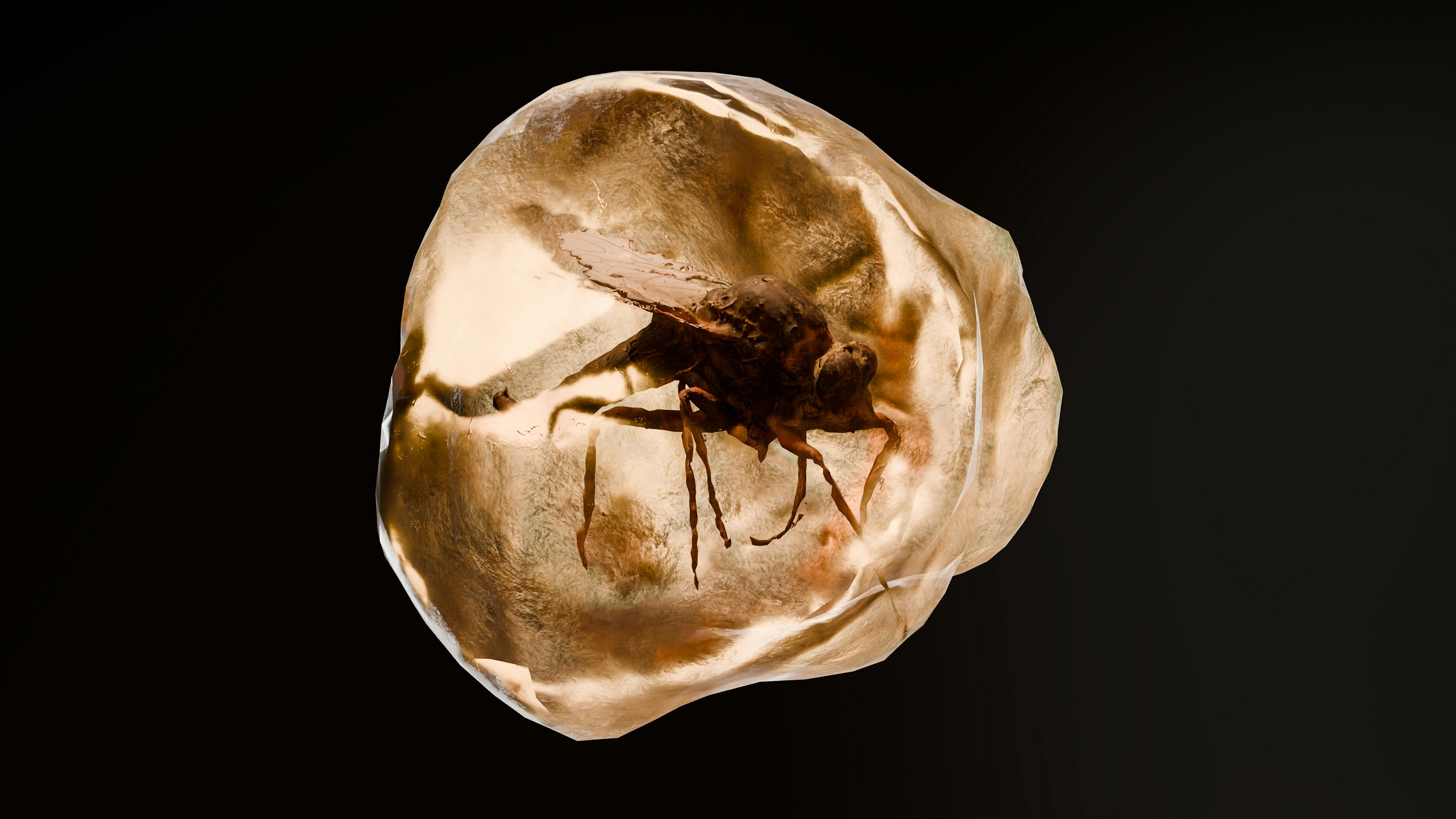
The third is gene “resurrection.”
Banks of genetic information from extinct species, and related techniques, are being used to restore traits, with implications for conservation, medicine, and climate-adjacent biology. This isn’t about bringing back dinosaurs, but it does raise practical questions about how biological traits move across time and ecosystems.
In a striking example, researchers recently sequenced the entire genome of a woolly rhinoceros from the preserved stomach contents of a 14,400-year-old wolf pup found in Siberian permafrost, a first for any Ice Age animal and a powerful demonstration of how high-quality ancient DNA can still be recovered.
Beyond that, a team in northern Saudi Arabia extracted preserved DNA from naturally mummified cheetahs, offering new insights into genetic diversity and potential rewilding strategies for big cats that once roamed the Arabian Peninsula. Meanwhile, biotech groups like Colossal Biosciences have created “woolly mice” — genetically edited rodents that express traits inferred from extinct woolly mammoths, as a proof of concept for trait restoration in living species.
None of these technologies are flashy consumer products, like AI tools, but they operate at a much more foundational level, and their impact is more likely to accumulate slowly than announce itself all at once. That’s part of what makes them so socially and ethically controversial.
Studying LLMs like an alien life form
One non-biological item on the list that is quite notable, perhaps even counterintuitive, is the mechanistic interpretability of large language models.
What’s interesting here is not so much the technical work itself, but the framing. Researchers are increasingly trying to understand large language models by observing and probing them (like mapping internal behavior, testing responses, and identifying patterns), rather than treating and documenting them like good old software systems.
In practice, that means studying LLMs almost like complex natural systems. Less “we defined every rule, and it is in the description,” and more “we built something, and now we need to understand how it behaves, changes over time.”
Anyway, what stood out to you in this year’s MIT Technology Review’s list of 10 Breakthrough Technologies 2026? Was it the biology, the AI, or something else entirely? I’m curious how others read it.
Multimodality without grounding is hallucination with extra steps. The winners aren’t those stitching together vision + audio + text—but those building agents that *reason across* modalities with purpose, memory, and error correction.